
Mobile Bumper Repair in Durham Region: Costs and Repair Options
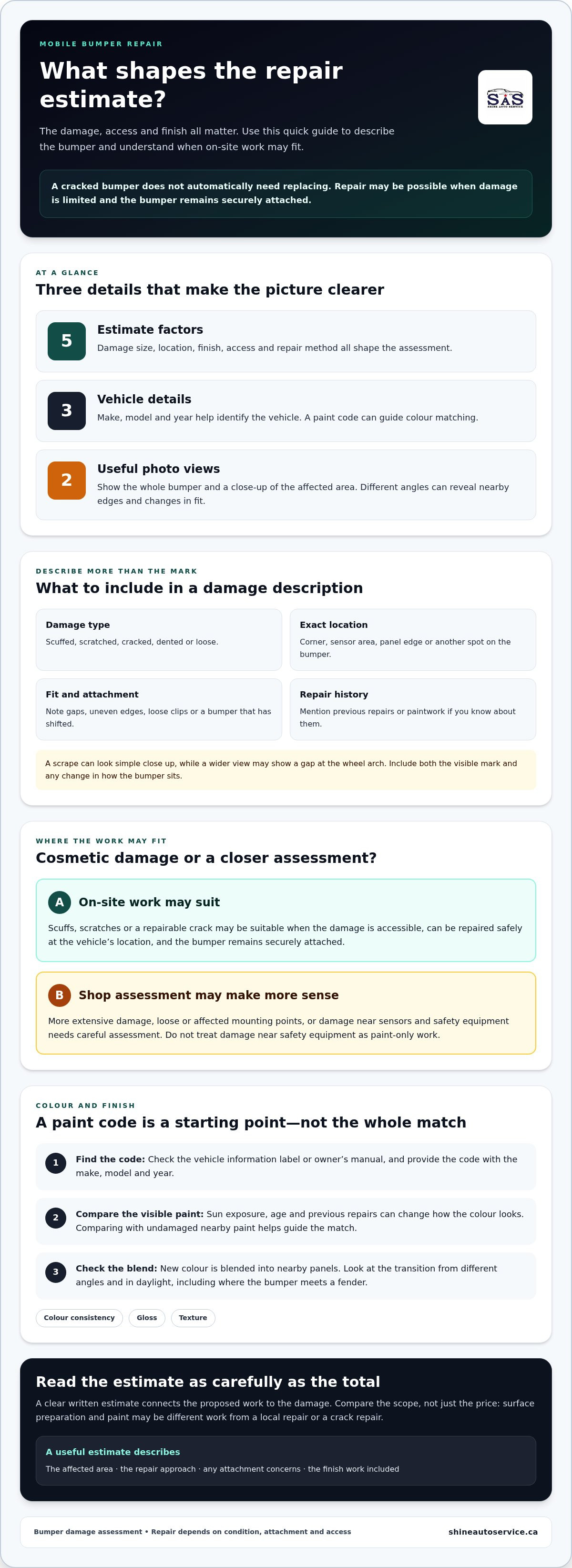
A cracked bumper doesn’t automatically need replacing. Mobile bumper repair can be done on-site when damage is limited to scuffs, scratches or a repairable crack, and the bumper remains securely attached. More extensive damage, especially around mounting points or safety systems, may need a shop assessment.
A bumper scrape is frustrating, and it’s reasonable to wonder whether a repair will hold up or become a larger job. The right option depends on the damage, not just how it looks from a few steps away.
This guide explains what can be repaired at your location, what affects the cost and when a shop visit makes more sense. You’ll also learn how bumper and dent repairs are assessed, so you can understand the next step before deciding on a repair.
Table of Contents
Can a plastic bumper be repaired without replacing it?
Often, yes. A plastic bumper with repairable surface damage or a crack may be restored without replacing the whole part, depending on its condition and attachment points.
Paint matching starts with the vehicle’s paint code. Find it on the vehicle information label or in the owner’s manual, then provide the code along with the vehicle’s make, model and year. The code gives the refinisher a starting formula, but it may not reflect how the paint looks today. Sun exposure, age and previous repairs can change the visible colour. A close inspection beside undamaged paint helps guide the final match.
Paint Blending and Finish
After the damaged area is prepared and painted, blending feathers the new colour into nearby panels instead of leaving a sharp edge. Check the transition from different angles and in daylight, especially where the bumper meets a fender. Gloss, texture and colour should look consistent. A mismatched finish can stand out to a future buyer, while a tidy repair helps preserve the vehicle’s overall appearance.
On-Site Colour Matching
On-site colour matching and blending bring the repair to your vehicle, avoiding the need to move it for suitable cosmetic work. The technician can compare the paint code with the bumper and nearby panels, then assess how the colour looks in the location’s lighting. A clean work area and access around the damaged section help with preparation, application and blending.
Computer-assisted paint matching can compare a vehicle’s paint code with available formula variants. The code narrows the starting point; a visual comparison helps account for fading or an older repaint. For example, if the bumper looks lighter than the adjacent fender, matching the label alone may leave a noticeable difference. Combining the formula with an in-person colour check helps refine the blend.
Before deciding on a repair, inspect the whole bumper, not just the visible mark. Check whether the plastic is split, whether the edges sit evenly, and whether clips or mounting points have come loose. A small scuff may need surface preparation and refinishing; a crack may need repair before paint is applied. Damage near sensors or safety equipment needs careful assessment.
According to Transport Canada, improperly deactivating complex air bag systems could deprive vehicle occupants of the benefit of other vital safety systems. That’s why bumper damage near safety equipment should not be treated as a paint-only issue. One customer testimonial describes a bumper repair visit that ran from 9 AM until noon.
Estimates and appointment requirements
A clear estimate helps you understand the proposed repair before booking. The damage, access to the bumper and repair method all matter.
Upfront Pricing Estimates
The price depends on the damage and is provided after a quote request. Damage size, location, finish, access and repair method all shape the assessment. An estimate should identify the visible damage and the work it covers. For example, a scraped corner may need different preparation from a split section or a bumper pulled away from its clips.
To describe the damage, note where it is and what has changed. Is the mark on a corner, near a sensor or beside a panel edge? Is the bumper dented, cracked, scratched or loose? These details help distinguish surface refinishing from work that may involve reshaping or reattaching the bumper.
Obligation-Free Estimates
An obligation-free estimate gives you a written cost outline without requiring you to proceed with the repair. Read the scope as carefully as the total. It should connect the proposed work to the damage, such as filling and refinishing a scuff or repairing a crack before applying paint.
Compare like with like. If one estimate covers paint and surface preparation, but another describes only a local repair, the totals may represent different work. Check whether the damaged area, finish and any loose attachment points appear in the description. A clear scope makes the decision easier, without pressure.
Appointment Requirements
Prepare the vehicle details and damage description before arranging an appointment. The make, model and year identify the vehicle; the bumper’s location and visible condition explain the repair concern. A few clear photos from different angles can show the full panel, close-up damage and nearby edges.
Choose a safe, accessible place for the vehicle, such as a driveway or workplace parking area. Make room around the damaged bumper so its edges and attachments can be viewed. If the bumper is loose, note which side has shifted and whether it rubs against another panel.
Before sending a quote request, gather the information in one place. Include the vehicle details, a short description and photos showing both the whole bumper and the affected area. Mention previous repairs or paintwork if you know about them. That context can affect how the visible damage is assessed and what preparation the finish may need.
For example, a shallow scrape across a painted corner may look straightforward in a close-up, while a wider view reveals a gap at the wheel arch. That gap matters because the bumper may have shifted at a clip or mounting point. Describe both the mark and any change in fit, rather than judging the repair by paint damage alone.
Once you receive an estimate, check that it describes the repair you requested. Look for the affected area, the intended repair approach and the finish work. If the written scope mentions a scuff but leaves out a nearby crack shown in your photos, clarify the difference before deciding. A precise description helps prevent mismatched expectations.
Appointment planning also means considering access. Park where the damaged section can be reached and inspected, and remove items that block the bumper. If the vehicle has visible sensor openings or damaged trim, point them out when describing the issue. These simple steps give the assessment a more complete picture of the repair.
How much does a bumper scuff repair cost?
The price depends on the damage and is provided after a quote request. Damage size, depth, location, access and repair method all affect the estimate. For example, a shallow mark on an open bumper area involves different work from a gouge beside a cracked edge.
When choosing a mobile bumper repair service in Canada, look for a clear estimate that describes the damage and proposed work. Check that it accounts for cracks, holes, loose clips or nearby sensors, not just the visible scuff. A useful assessment explains whether the repair involves surface marks, reshaping, patching or reattaching the bumper.
Shine Auto Service Inc provides mobile bumper repair across Durham Region. The vehicle’s location must be within the service area, and the site needs enough access for the bumper to be inspected and repaired.
Different damage calls for different repair steps. A scuff usually affects the surface finish; a scrape may expose the layer beneath the paint. A gouge removes more material, while a crack or tear splits the plastic. A hole or puncture creates an opening that needs assessment beyond a simple touch-up.
Look closely at the damage’s shape and position. A short scratch across a flat section differs from a deep gouge on a curved corner. A crack reaching the bumper’s edge may continue beneath the surface, while a puncture near a sensor opening may involve components that need careful attention. Photos from close up and farther away show both detail and placement.
For a dent, the repair approach depends on whether the plastic is merely pushed inward or also split. A dent beside a scratch may require separate surface preparation and paint work. A crack needs attention to the split before refinishing; applying paint over an open crack won’t restore the surface. The repair plan should match the damage rather than treating every mark as a scuff.
Mobile work suits damage that can be reached and assessed safely at the vehicle’s location. Clear access around the bumper helps reveal its edges, gaps and attachment points. If a corner has pulled away, note whether it moves or sits unevenly. Those clues can point to clip or mounting damage, which differs from a surface-only repair.
Before requesting an estimate, record the vehicle’s make, model and year, then photograph each affected area. Include a close-up of the scuff, crack, hole or puncture and a wider view showing its position. Describe whether the bumper is loose, dented or scraped. This gives the estimate a clearer picture of the repair steps involved.
What bumper damage cannot be repaired mobile?
Mobile repair suits cosmetic damage that can be reached and assessed safely at the vehicle’s location. Damage involving deeper structural concerns, hidden components or extensive replacement work calls for a shop assessment.
Safety and quality risks arise when hidden damage is treated as a surface flaw. Transport Canada says improperly deactivating complex air bag systems could deprive vehicle occupants of the benefit of other vital safety systems.
Cosmetic Damage Suitability
A shallow scrape, paint scuff or small dent on an accessible bumper area can suit on-site repair. The key is whether the plastic remains stable and the bumper sits properly against adjoining panels. For example, a scratch across a firmly attached corner differs from a split that runs into a mounting edge.
Minor auto-body damage can also include scratches on a door, a small dent in a panel or localized rust. Check the bumper’s shape and gaps, and whether it moves when lightly touched. Those visible details help distinguish a surface repair from work involving attachments or deeper damage.
Safety and Quality Risks
A rushed repair can leave uneven paint, a visible edge or a crack that reopens. Look at the prepared surface, colour transition and fit around the bumper. A gap beside a headlight or wheel arch, for instance, can signal that the panel has shifted rather than suffered only cosmetic damage.
Safety matters more when impact damage is near sensors or air bag components. Transport Canada warns that improper deactivation of complex air bag systems can affect other vital safety systems. Damage in that area needs proper assessment before cosmetic work proceeds.
A shop visit is appropriate when damage extends beyond a repairable surface area. A bumper that is badly torn, distorted across a wide section or separated at several attachment points may need more access than a driveway repair allows. Replacement can also be necessary when the plastic cannot hold a sound repair or the damaged section cannot be restored to a secure fit.
Check the bumper’s full outline, not just the impact mark. Compare its edges with the fender, grille and nearby panels. A corner sitting lower than the opposite side, a large gap or a section that shifts indicates a fit problem. A scuff with an intact shape presents a different repair question.
Mobile work also depends on the site. A cramped space, poor access around the bumper or weather that prevents proper surface preparation can affect the work conditions. A sheltered, level area with room to reach the damaged section supports inspection and finishing. If the repair needs extensive dismantling or access to concealed components, a shop setting is more suitable.
Use a practical screen before booking: identify whether the damage is surface-level, note any cracks or loose edges, and check whether nearby panels still align. Photograph the whole bumper and the affected area. That record helps distinguish cosmetic repair from damage requiring deeper inspection or replacement.
Mobile bumper and dent repair
Mobile repair brings bumper and dent work to your vehicle’s location. The process starts with an inspection, then matches the repair method to the damage and finish.
A mobile bumper repair visit typically follows these steps:
Inspect the area. The technician checks the bumper’s shape, paint, edges and fit against nearby panels. A dent beside a cracked corner needs a broader assessment than a shallow door ding.
Plan the work. The repair method depends on the material, damage depth and access. A pushed-in dent may need reshaping; a scratch may need surface preparation and refinishing.
Prepare the surface. Dirt, loose paint and rough edges must be addressed before repair materials or paint are applied. For a crack, the split needs attention before the surface can be refinished.
Restore the shape and finish. The technician repairs the affected area, then applies the appropriate finish work. A bumper repair may include paint blending, while a dent repair focuses on returning the panel’s contour.
Review the result. Check the repaired surface from different angles and compare the bumper’s fit with adjacent panels. Look for a smooth transition, even finish and secure edges.
Combined damage needs a coordinated plan. For example, a parking-lot impact may leave a bumper dent and a scrape across its painted corner. Treating only the scrape could leave the distorted shape visible, so the dent and finish need to be considered together.
Location affects the method, too. A shallow dent on an accessible panel differs from a crease beside a body line or a bumper edge. A tight curve can be harder to reshape cleanly, while damage near a sensor opening needs attention to the component and surrounding fit.
Mobile work is practical when the repair area is accessible and the vehicle can remain safely positioned. A clear driveway or workplace parking space gives room to inspect the panel and reach its edges. Extensive damage, loose attachments or signs of hidden impact need a more involved assessment than surface repair alone.
Before the appointment, photograph the dent and bumper from close up and farther back. Note whether the panel feels loose, whether paint is missing, and which nearby panels have shifted. These details help describe the full job, not just the most noticeable mark.
For bumper or dent damage, request a repair estimate based on the affected areas and vehicle details.
Shine Auto Service Inc: Bumper Repair
Shine Auto Service Inc brings bumper repair to your location in Durham Region, making it a practical option for cosmetic damage that can be handled on-site. Turn to the service for a scuff, crack or bumper that needs attention. Describe the visible damage and include photos when making an enquiry.
Scratches Repair Service can address marks in the finish, while Dent Repair suits dents affecting the panel’s shape. Rust Repair is available for localized rust concerns. Describe any loose edges or changes in panel fit so the repair can be discussed with the full picture.
For damage involving safety systems or extensive structural work, a shop assessment may be more appropriate than cosmetic mobile repair. For bumper or surface damage suited to mobile work, contact Shine Auto Service Inc to discuss the repair.
Choose the next step that suits your vehicle
A repair decision is easier when you know what you want the finished vehicle to look like. Is your priority a cleaner appearance, a smoother panel or addressing a visible mark before it worsens? That practical goal can guide the conversation and help keep the repair focused on what matters to you.
For mobile bumper repair in Durham Region, Shine Auto Service Inc offers bumper repair, scratch repair and rust repair. Share your main concern and the result you’re hoping for, then discuss a sensible way forward. Straight answers make it easier to decide whether to proceed without turning a small repair into a bigger project.
Contact Shine Auto Service Inc to discuss your repair. A clear next step can make getting your vehicle back in shape feel manageable.
Frequently Asked Questions
Do I need an appointment to get an estimate?
Send an estimate request with your vehicle details and a description of the damage. For a Durham Region bumper, include clear photos from close up and farther back, plus notes about loose trim or a shifted panel. This helps explain what needs attention. An estimate request and a repair appointment are separate steps, so review the proposed work and quote before deciding whether to proceed.
How long do you need my car?
The time required depends on the repair steps, the damaged area and the finish work. A surface scratch may need different preparation from a cracked bumper or a dent combined with paint damage. Access to the vehicle and space around the panel also affect the work. Share photos and describe each affected area so the repair scope can be assessed before scheduling.
Should I claim bumper damage on insurance or pay for it myself?
Compare the repair estimate with your policy deductible before deciding. Also consider whether the damage involves other vehicle parts or another party, since those details can affect how you handle a claim. Ask your insurer about coverage, claim requirements and any effect on your policy. Keep the estimate, photos and incident details together so you can discuss the same repair scope with your insurer.
What types of bumper damage can mobile repair technicians fix?
Mobile bumper repair can address localized cosmetic damage, such as scuffs, scratches, some cracks and dents, when the bumper is accessible and suitable for repair. A loose bumper may need its clips or fit assessed. A large split, badly distorted panel or damage near safety equipment calls for closer assessment before cosmetic work. Describe the damage and include photos showing the whole bumper.
How long does mobile bumper repair usually take?
There isn’t one duration that fits every repair. Surface preparation, reshaping, crack repair, paint application and finishing each affect how long the vehicle is needed. For example, a painted scuff and a dent with cracked plastic involve different steps. Ask for the expected schedule alongside the estimate, and plan to leave the vehicle accessible for the agreed work and finishing process.
Is mobile bumper repair cheaper than a body shop?
It can cost less in some cases, but compare estimates with the same repair scope. A customer testimonial described a repair costing less than half another body shop’s quote. That example isn’t a standard rate. Damage, materials, repair time and paint work affect the quote. Compare what each estimate includes, not just the total, before choosing how to proceed.
Can mobile bumper repair fix cracks, dents, scratches, and paint damage?
Yes, localized cracks, dents, scratches and paint damage may be repairable on-site if the bumper’s condition and access suit the work. A scratch may need refinishing, while a crack needs attention to the split before paint. A dent can involve reshaping and surface work. If the bumper is badly distorted or shifted at several mounting points, cosmetic repair alone may not address the damage.
Do mobile bumper repair services offer warranties or insurance billing?
Warranty coverage and direct insurance billing vary by repair arrangement, so they aren’t automatic parts of a mobile service. Shine Auto Service Inc provides per-job quotes based on damage severity, required materials and repair time. If you plan to make an insurance claim, ask your insurer about coverage, documentation and billing arrangements. Keep the quote and damage photos handy for that discussion.
Comments