
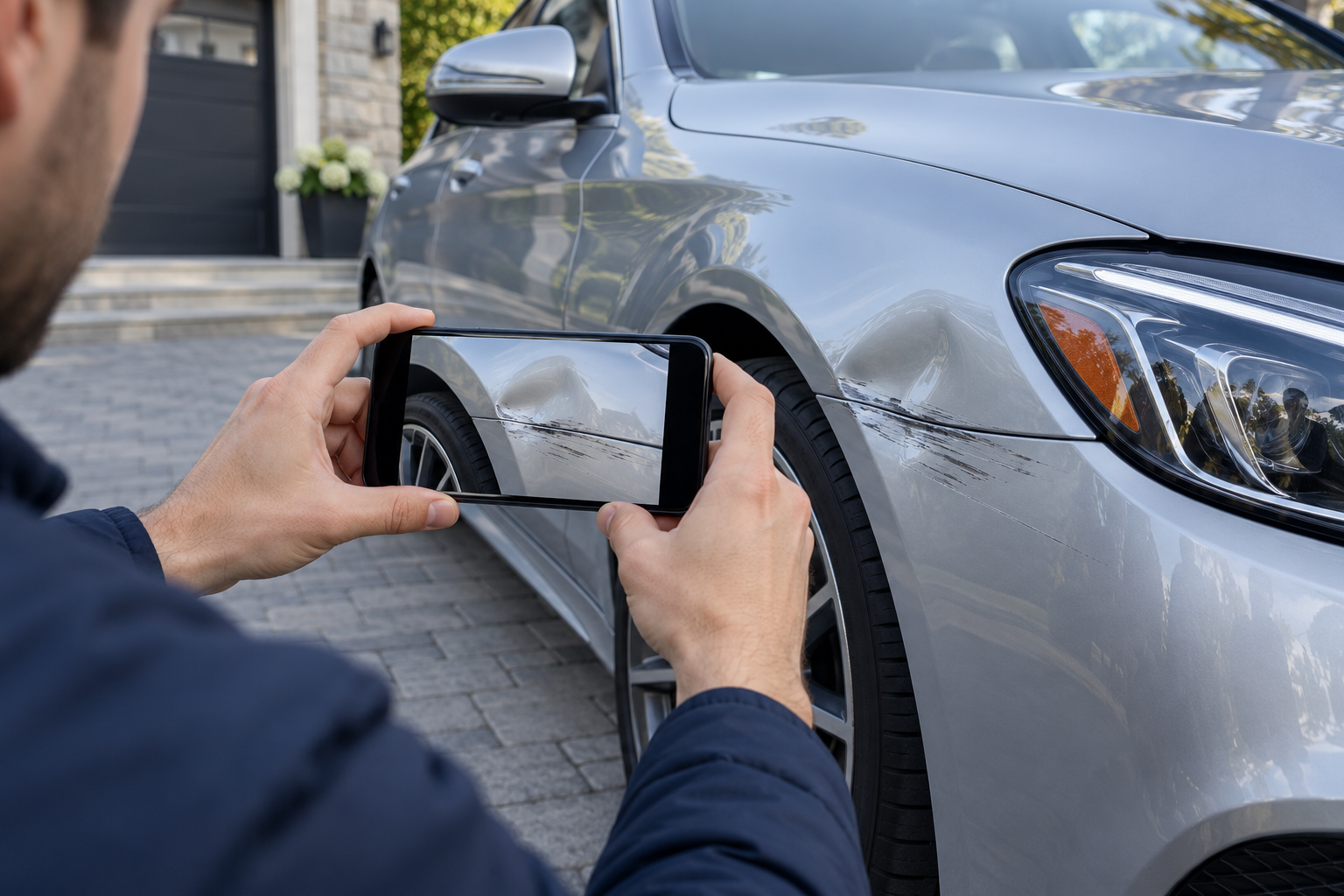
Clear photos help us understand visible damage and discuss the next step. You do not need professional equipment—a phone camera in daylight is a useful starting point.
Take three types of photo
- A wide view showing the whole damaged panel and surrounding areas.
- Close-ups showing the crack, dent, scratch or rust.
- An angled view showing the depth of a dent or an uneven bumper gap.
Include the details
Send the vehicle year, make and model, your city and a short explanation of the damage. For RVs, heavy equipment or ice resurfacing machines, include the model and approximate size of the affected area.
Explain the working location
Tell us whether the vehicle is at a home, workplace or job site. Space, access, weather and permission to work at the location need to be confirmed before a mobile appointment.
A photo quote is an initial assessment. Hidden damage and the actual panel condition may change the repair plan.
Match the photos to the type of damage
For a cracked bumper, photograph the split and the points where the cover meets adjacent panels. For a dent, take a view from an angle so changes in the panel shape can be seen. For scratches and rust, include the surrounding paint and panel edges rather than sending only an extreme close-up.
Help us plan the mobile appointment
Your city is important because travel and availability depend on the project. Also mention parking access and whether the location belongs to a home, workplace, apartment property or commercial site. Permission, available space and suitable working conditions need to be agreed before a visit.
What to leave out
You do not need to send your driver’s licence, insurance documents or unrelated personal paperwork for an initial cosmetic repair enquiry. Check your images for personal information before sharing them.
Common questions
Are photos enough for a final fixed scope?
Not always. Hidden damage and the actual panel condition can change the repair plan after inspection.
What if I have several damaged panels?
Send a wide photo showing their positions, followed by close-ups of each panel. Describe which areas you want assessed.