
Cracked Bumper Repair Costs and Estimates in Oshawa
Shine Auto Service · October 23, 2026
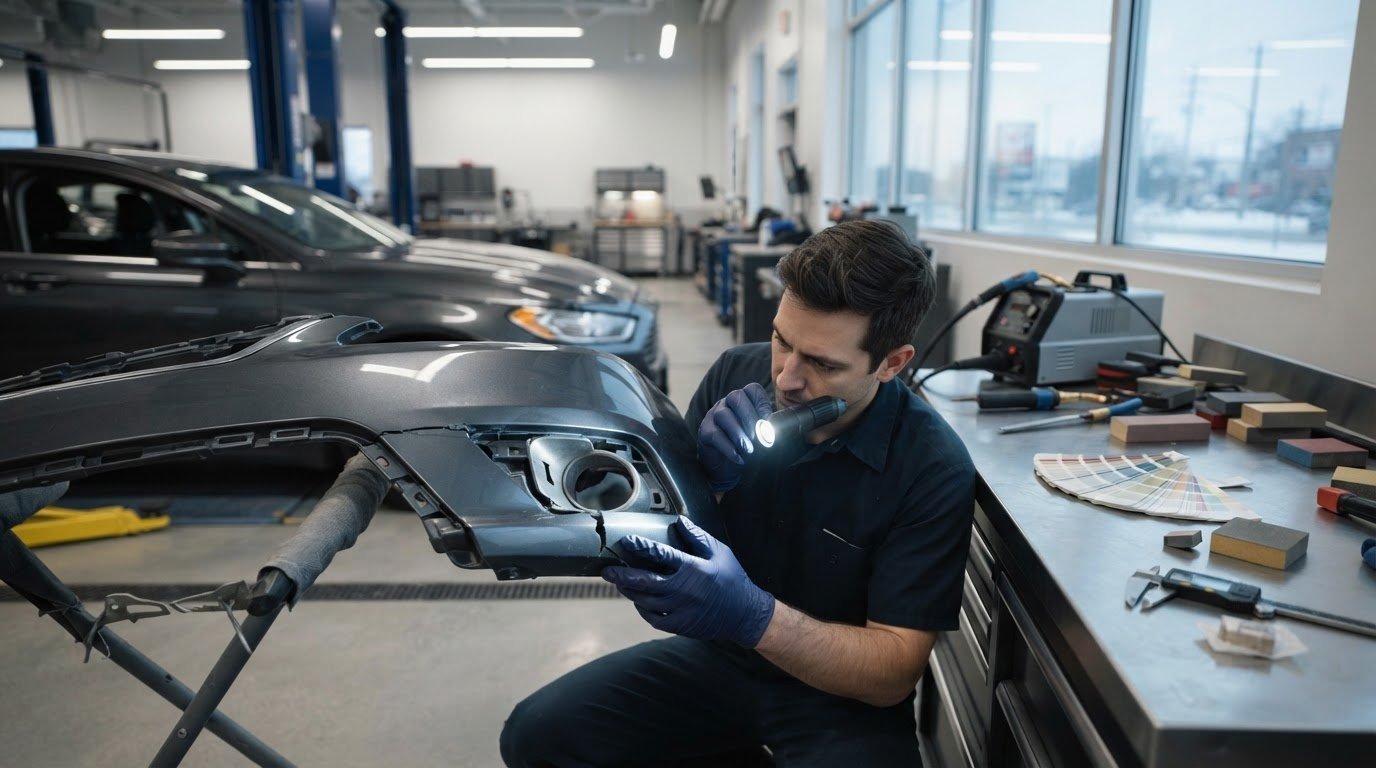
A cracked bumper doesn’t automatically need replacing. Cracked bumper repair may be possible when damage is limited to the cover, but the crack’s location and extent, hidden damage, and paintwork all affect the repair plan and cost. An accurate estimate starts with assessing the damage, not guessing from a photo alone.
A split or loose bumper can be stressful, especially when you’re planning around your car and your day. The price depends on the damage and is provided after a quote request. Key cost factors include the crack’s size and position, whether the cover can be repaired or needs replacement, and the refinishing required. This guide explains how repairs work, what shapes an estimate, how to arrange one in Oshawa, and what can affect the time involved. You’ll know what details to share before deciding on the next step.
Key Takeaways
- Look beyond the visible split: damage to the bumper’s supports or the parts behind the cover can change the repair plan.
- For a useful estimate, share clear photos and details about the damage, vehicle, and paint colour.
- Repair or replacement costs depend on the damage, the parts required, and the refinishing involved.
- Repair time depends on the work needed, including preparation, paint matching, and finishing.
- Plastic cracks can be reinforced and refinished; the location and condition of the damaged area help determine the right approach.
Table of Contents
Bumper repair process
Cracked plastic bumper repair starts by locating all the damage, not just the visible split. The cover may conceal broken clips, loose supports, or damage to the steel bar behind it. Removing the bumper assembly provides access to the inner surface and a clearer view of the work required.
Plastic cover repairs follow a practical sequence. The repairer assesses the crack, checks the inner side, and selects a suitable repair method before refinishing the surface.
Inspect the damage. Check the crack’s length, position, edges, and nearby mounting tabs. Look behind the cover for damage to supports or the steel bar.
Remove the assembly. Taking off the bumper exposes the inner surface and makes it easier to work on the damaged area properly.
Prepare the plastic. Clean the repair area and create a suitable bonding surface. For adhesive repairs, the inside may be roughened with 160-grit abrasive.
Rejoin and reinforce. Plastic welding can repair a crack. Another method uses plastic-bumper adhesive with reinforcement on the inward-facing side.
Finish the exterior. Smooth the repaired surface, then apply paint made for plastic when refinishing is needed.
Materials depend on the crack and the bumper plastic. Options include a plastic welder, adhesive designed for plastic bumper repair, epoxy resin and glass cloth, or plastic filler. Sanding abrasives, clamps to hold the crack closed, and paint made for plastic may also be needed. Regular fibreglass resin may not bond well to the polymers used in plastic bumpers.
When choosing a bumper repair shop in an Ontario city, look for a clear explanation of the repair steps and why the cover should be repaired or replaced. A useful estimate identifies visible damage, possible hidden damage, refinishing needs, and the proposed approach. For example, the repairer should distinguish a cracked cover from damage to the steel bar behind it.
The steel bar sits behind the decorative bumper cover. Damage to the bar may call for a different repair approach than damage to the plastic cover. A dent in a plastic cover may be popped out after the bumper is removed and heated. These are different repairs, so identifying the damaged part matters before work begins.
Paint matching affects the final appearance. Touch-up paint should match the vehicle’s make, model, and colour. Shine Auto Service Inc also provides mobile plastic bumper repairs at customers’ homes or workplaces when the repair suits an on-site approach.
Estimates and appointment requirements
A useful estimate starts with clear details about the vehicle and the damaged area. For drivers in Oshawa, photos can help show the visible crack before arranging an assessment. They can’t reveal every hidden clip or support, so an inspection may change the repair plan once the bumper is accessible.
Prepare a brief damage record before requesting an estimate. Include the vehicle’s make, model, year, and colour, then describe where the crack is. Note whether the bumper is loose, rubbing against a tyre, or separated near a corner. These details help distinguish a surface split from damage affecting fit or attachment.
Take useful photos. Capture the whole front or rear of the vehicle, a close view of the crack, and an angle showing how the bumper meets the body.
Describe what happened. A low-speed parking impact, for example, may leave a different pattern from a scrape along a post.
Share earlier repair details. Previous filler, paint, or repairs near the same area can affect preparation.
Identify paint details. Give the vehicle colour and any available paint-code information so refinishing can be considered accurately.
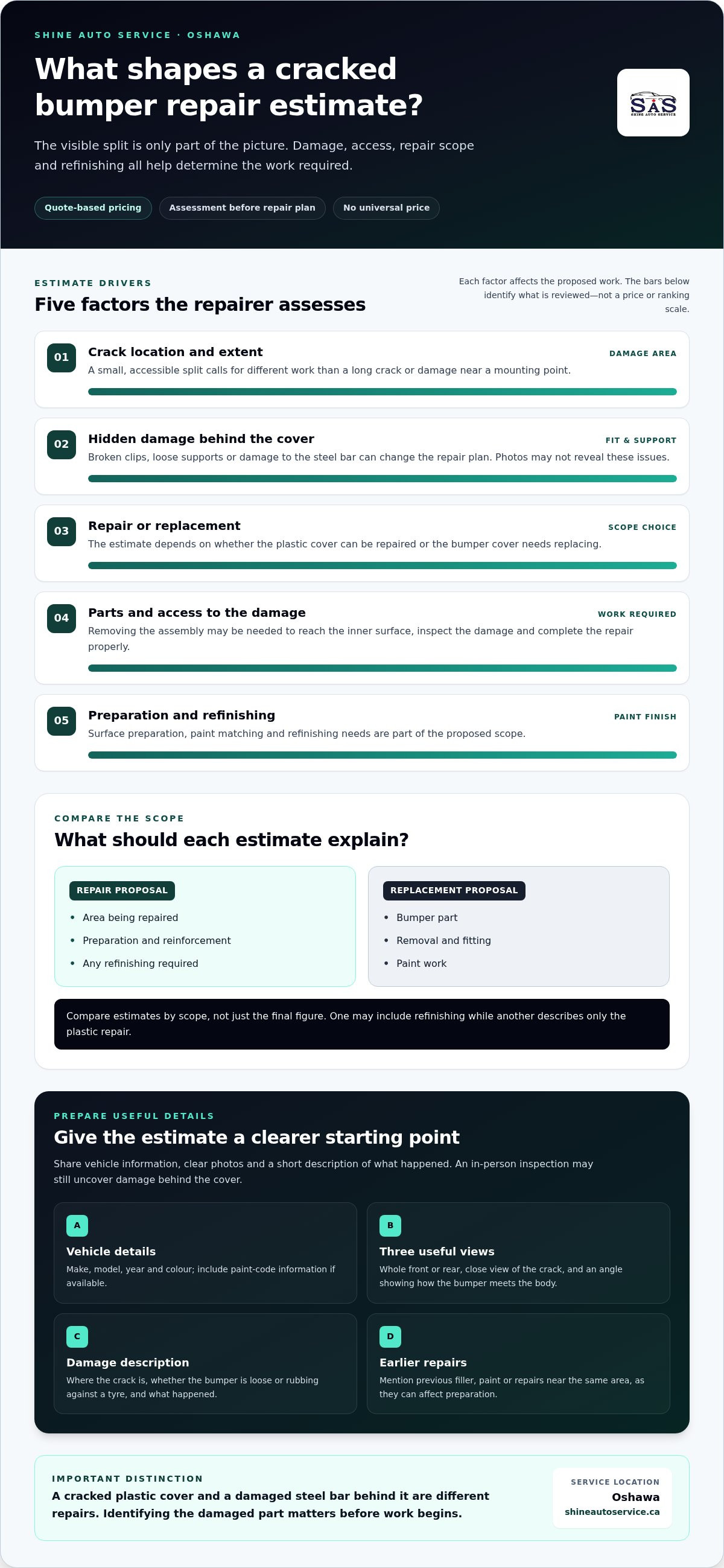
The price depends on the damage and is provided after a quote request. Key cost factors include the crack’s location and extent, hidden damage, repair versus replacement, parts, and refinishing. A clear estimate should separate the proposed repair work from replacement parts or paint preparation. Ask why each step is needed, such as removing the assembly to reach damage on its inner surface.
Before booking, clarify what the estimate covers and how the appointment will work. Ask whether the initial assessment uses photos, an in-person inspection, or both. Confirm where the vehicle should be parked and whether the damaged area needs to be accessible. Keep the bumper clear and have the keys available if access to the vehicle is needed.
There is no universal document list for every bumper estimate. Vehicle details, photographs, and a clear description of the damage give the repairer a practical starting point. If an insurer is involved, keep related claim information together and mention it when requesting an estimate. A photo alone may not reveal cracked mounts or damage behind the cover.
Compare estimates by scope, not just by the final figure. One proposal may include refinishing, while another may describe only the plastic repair. Check that each explains whether it addresses loose clips, fit, and visible paint damage. To start organizing the damage details for an estimate, share your bumper damage details.
Repair costs and price comparisons
The cost of cracked bumper repair depends on the damage and the work required. The price is provided after a quote request. A small split in an accessible plastic cover calls for different work than a crack near a mounting point, hidden damage, or a cover that needs replacing.
Compare estimates by checking what each includes. A repair proposal should identify the area being fixed, preparation, reinforcement, and any refinishing. A replacement proposal should separate the bumper part from removal, fitting, and paint work. This breakdown helps explain why totals can differ, even when both estimates describe the same visible crack.
Damage and access: A long crack or damage near a tab can require more preparation and reinforcement.
Repair or replacement: A repair keeps the existing cover; replacement adds the part and fitting work.
Paint requirements: Colour matching, surface preparation, and refinishing affect the work included.
Hidden components: Broken clips or damage behind the cover can add work beyond the visible split.
For example, one estimate might propose repairing and refinishing a plastic cover, while another recommends replacing it. Ask why replacement is necessary and whether both proposals address the same damage. If the cover is loose, check that the estimate includes the required attachment work, not just cosmetic repairs.
Insurance coverage depends on the policy and the circumstances of the damage. To decide whether a claim is worthwhile, compare the covered repair amount with your deductible and review the policy’s claim terms. A claim is more relevant when eligible damage exceeds the deductible; a small repair close to that amount may offer little practical benefit. Keep the estimate and damage photos together when discussing the claim.
In Ontario, don’t treat an estimate as a final invoice if inspection hasn’t exposed the bumper’s inner side. Hidden cracks, broken tabs, or damage to the bar behind the cover can change the work required. Ask how newly discovered damage will be explained and priced before approving additional repairs. This keeps the decision based on the actual condition, not guesswork from the outside.
Use the same checklist for each estimate: repair or replacement, included parts, preparation, paint work, and hidden damage. Compare the scope and expected finish, not just the total. If a quote leaves out refinishing or attachment repairs, its lower price may not cover the same completed job. Clear line items make it easier to understand what the proposed work will restore.
Repair turnaround time
Repair time depends on the work, not just the visible crack. In Oshawa, removing the bumper assembly adds a step but provides access to the inner surface and hidden damage. Repairs requiring reinforcement and refinishing also involve more stages than work limited to rejoining plastic.
Think of the job as a sequence. Each stage needs to be completed before the next can produce a sound, clean finish.
Inspection and removal: The repairer checks the cover, attachment points, and steel bar, then removes the assembly when required.
Preparation: The damaged plastic is cleaned and prepared for welding or adhesive reinforcement.
Repair and shaping: The crack is joined and reinforced, then the outer surface is smoothed.
Refinishing: Paint preparation and colour matching follow when the repair needs a cosmetic finish.
Reassembly: The bumper is refitted, and its attachment and alignment are checked.
Paint work often affects the overall schedule. The repaired cover must be prepared before plastic-compatible paint is applied. The finish then needs to reach the condition required for handling and reassembly. A repair without repainting avoids those refinishing steps, while a visible crack on a painted surface often needs them for a consistent appearance.
Hidden damage also changes the sequence. A broken tab discovered after removal needs attention before the cover can be secured. Damage behind the bumper cover may require work beyond plastic-cover repair. If inspection reveals either issue, the original work plan no longer covers the full job. The added steps affect when the vehicle is ready.
Parts and paint matching also affect scheduling. A replacement cover must be available before fitting can proceed, and the paint must match the vehicle’s make, model, and colour. A less common colour or a part that needs sourcing adds coordination between assessment, preparation, and installation. These details matter more than how the crack looks in a single photograph.
Mobile plastic bumper repair can reduce travel and drop-off arrangements when the work suits a driveway setting. It doesn’t eliminate the repair stages: access, reinforcement, surface preparation, and any refinishing are still required. Before arranging a repair in Oshawa, share photos of the full bumper and close views of the damaged area. This helps identify likely steps early, while an inspection determines the actual scope.
To plan around the repair, ask which stages require the vehicle to stay in place and when reassembly will happen. A clear sequence helps distinguish hands-on repair from waiting for paint preparation or parts. For example, a cover needing plastic welding and colour-matched refinishing involves more steps than one needing only a localized repair. The repair plan, not a universal time estimate, explains the turnaround.
Repairing cracked plastic bumpers
A cracked plastic cover can often be repaired when the damaged area can be joined and secured. Plastic welding, or epoxy resin with glass cloth on the inward-facing side, can reinforce a split. The crack’s location, the condition of the plastic, and any damage to mounting points all affect the repair method.
Replacement is more suitable when the cover is too damaged to hold a reliable repair, or its shape and mounting areas can’t be restored. A torn section or several broken attachment points may make replacement the practical option. Damage to the steel bar behind the cover is a separate issue; if the bar itself is cracked, it requires welding.
For an adhesive repair, preparation matters. The inner surface can be roughened with 160-grit abrasive so the adhesive bonds to the plastic, not only to paint. Use adhesive designed for plastic bumper repair. Regular fibreglass resin may not bond well to the polymers used in bumper covers.
Clean and inspect. Check the crack from both sides, including nearby tabs and attachment points.
Align the split. Temporarily clamp the crack closed from the outside before applying reinforcement.
Reinforce the inside. Apply suitable adhesive and reinforcement, such as fibreglass mat or epoxy-coated glass cloth.
Finish the outside. Smooth the repaired surface and use paint made for plastic if refinishing is needed.
A torn cover may need plastic welding, which melts the material back together and adds ABS scrap sheet as filler. Broken hidden tabs may also be repairable with flexible reinforcement. Ordinary filler can crack as plastic flexes and changes size with temperature, so filler made for plastic parts is better suited to that movement.
A crack can make driving unsafe if the bumper is loose, dragging, has sharp broken edges, or obstructs a light or licence plate. A crack alone doesn’t establish that every vehicle is illegal to drive in Canada; the condition and location of the damage matter. Secure loose parts and arrange an assessment before driving if they could detach or interfere with visibility.
For a clean finish, professional repair typically welds the defect with plastic filler, then repaints the area for cosmetic reasons. Repairing a split without restoring its surface may leave visible marks. If your Oshawa bumper has a crack, torn plastic, or broken tabs, arrange a bumper repair assessment to determine whether repair or replacement fits the damage.
Coarse-grit sanding beneath glass cloth helps epoxy bond to plastic rather than paint, while fibreglass mat can reinforce the adhesive. Choose an adhesive made specifically for plastic bumper repair.
Shine Auto Service: Bumper Repair
Shine Auto Service Inc repairs bumper damage, including cracks, loose covers, and related surface marks. Its mobile auto body repair service brings the work to customers’ homes or workplaces, making it easier to arrange an assessment where the vehicle is parked. Turn to Shine Auto Service Inc for help deciding whether a damaged cover can be repaired or needs replacement. The visible split is only part of the picture; the condition of the plastic and its attachments matters too.
If bumper damage is accompanied by nearby scratches, dents, or rust, Shine Auto Service Inc can also address those repairs. Share the vehicle details and damage photos to describe what you’re seeing. Contact Shine Auto Service Inc to discuss the bumper damage and next steps.
Take the Next Step Toward a Sound Bumper
A damaged bumper doesn’t need to stay on your to-do list. Describe what you see and consider how you want the vehicle to look and fit after the work. That gives the repair conversation a clear starting point, whether the concern is a visible split, a loose fit, or nearby body damage.
Shine Auto Service Inc offers bumper repair, scratch repair, and rust repair. If the damage involves more than one area, raise those concerns together and discuss the work needed. A clear assessment helps you move from uncertainty to a practical plan for cracked bumper repair in Oshawa.
Share the damage details with Shine Auto Service Inc and take the next step at a pace that works for you. Contact Shine Auto Service Inc today to discuss your bumper repair. A clear plan can make getting your vehicle back in shape feel manageable.
Frequently Asked Questions
How much does cracked bumper repair cost in Canada?
The cost depends on the damage and the work needed to restore the bumper. A quote considers whether the cover can be repaired, whether parts are needed, and how much surface preparation and refinishing the job requires. In Oshawa, provide clear vehicle details and photos to start the estimate process. Compare quotes by checking that they cover the same repair scope, parts, and finish.
Is it cheaper to repair or replace a cracked bumper?
Repair may cost less when damage is localized and the cover remains suitable for fixing. Replacement may make more sense if the cover is badly split, misshapen, or unable to hold its attachments. Compare the complete proposed work, including fitting and paint, rather than the part alone. For example, a lower repair quote may exclude refinishing included in a replacement estimate.
Can a cracked plastic bumper be repaired at home?
Some small plastic cracks can be attempted at home if you have the right materials and can work safely. The repair requires suitable plastic-bumper adhesive or plastic-welding equipment, careful preparation, and a way to support the damaged area. A poor bond may separate as the cover flexes. For a daily driver with a visible split or loose edge, weigh the finish and fit against the time involved.
How long does professional bumper crack repair take?
There isn’t one turnaround time for every repair. A localized repair without refinishing has fewer stages than work involving surface finishing, paint, or replacement parts. Scheduling also depends on when the vehicle can be assessed and whether a part needs arranging. For an appointment in Durham Region, send photos beforehand and ask which work stages affect when you can use the vehicle again.
How do body shops repair and repaint cracked bumpers?
Body repair begins with assessing the cover and its attachments, then choosing a method suited to the plastic and crack. The damaged area is repaired and reinforced, smoothed, and prepared for refinishing. Paint made for plastic helps restore the surface appearance. The vehicle’s make, model, and colour guide paint matching. A final inspection checks the repaired area’s finish and how the bumper sits against nearby panels.