Mobile scratch repair for scratches that may not need repainting
Shine Auto Service · October 25, 2026
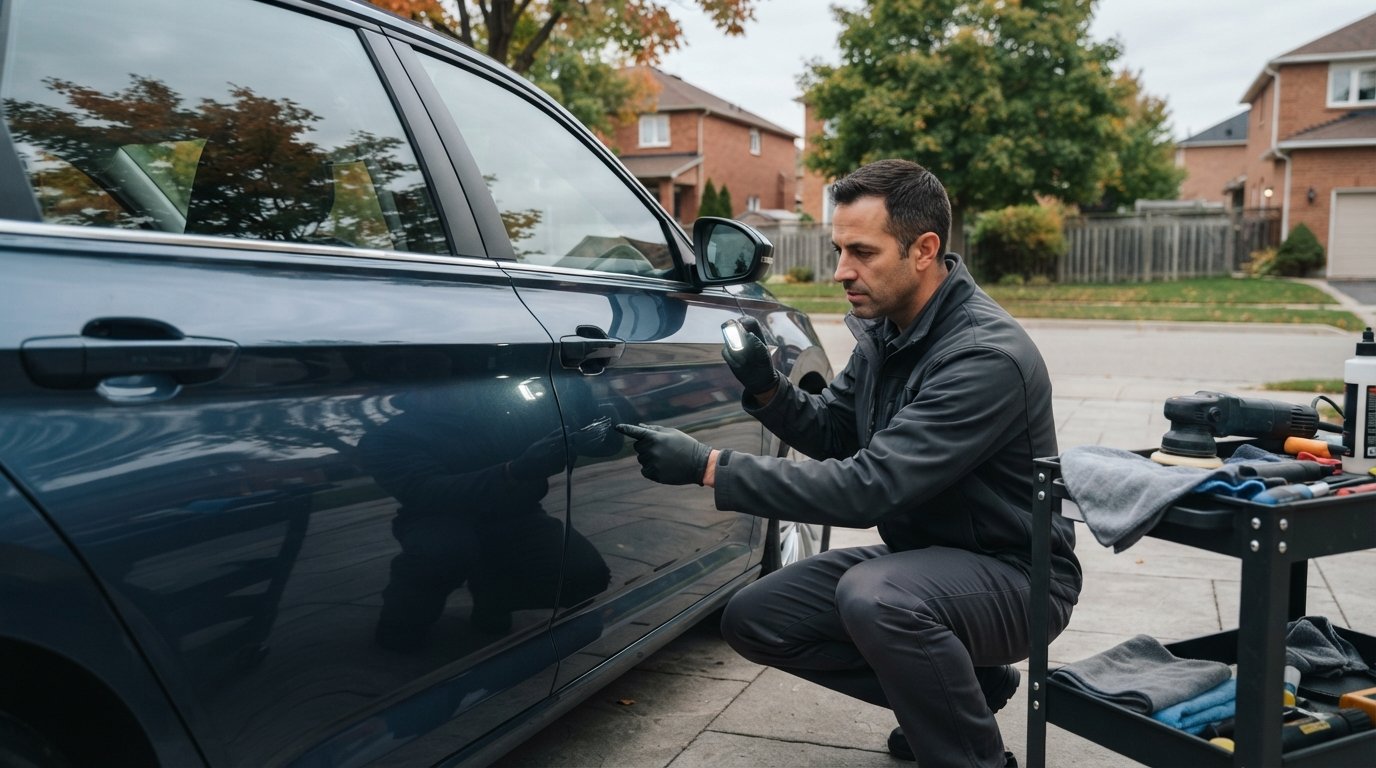
A small scratch isn’t always a buffing job. Mobile scratch repair can often improve marks limited to the clear coat, but a scratch through the colour coat or down to primer or metal needs paint repair, not buffing alone. The key is the depth of the damage, not just its length.
It’s tempting to hope a quick polish will make a scratch disappear. But polishing can’t replace missing paint, and the wrong approach may make the damage more noticeable. This guide explains how to assess a scratch, when paint or body work may be needed, and what to expect from an on-site repair. It also covers the details that affect the repair approach and how insurance may apply, so you can choose a sensible next step.
Key Takeaways
- Marks confined to the clear coat may be polished out; scratches through the paint need a different repair approach.
- Look at the scratch’s depth, not only its length, to judge whether buffing is likely to help.
- On-site repairs can reduce disruption, while the damage and work area shape how the job is handled.
- Before making an insurance claim, compare your policy coverage and deductible with the repair decision.
- Find out when scratches call for paint repair or body work, and which repair options fit the damage.
Table of Contents
Can you really fix scratches without repainting?
Sometimes. Buffing can improve a mark limited to the clear coat, but missing colour requires paint repair.
Car Scratch and Imperfection Removal
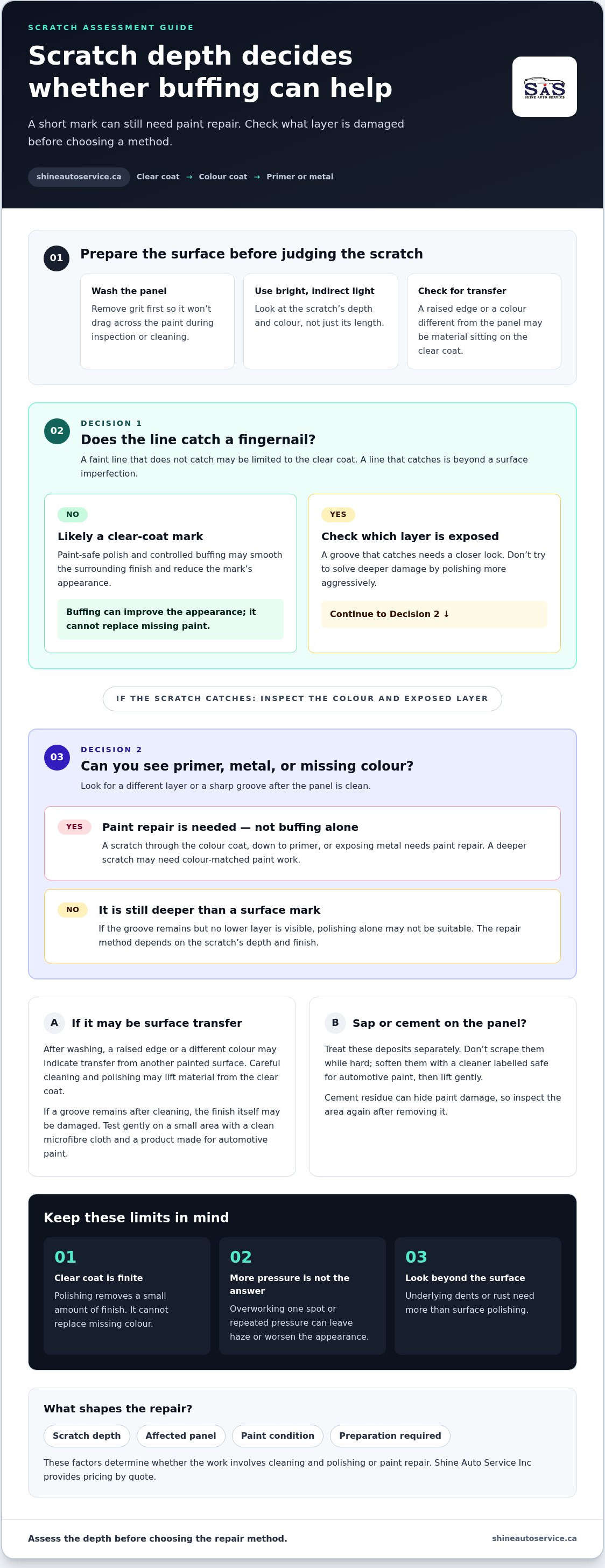
Clean the panel first, then inspect the scratch in bright, indirect light. A faint line that doesn’t catch a fingernail may be limited to the clear coat. Polishing can reduce its appearance by smoothing the surrounding finish. A line that catches, shows primer, or exposes metal goes beyond a surface imperfection.
Check the colour as well as the depth. A white mark on dark paint could be paint transfer, while a pale line with a rough edge may be a deeper cut. Scratch removal can improve clear-coat damage, but it can’t replace missing paint. That distinction tells you whether buffing alone is suitable.
Surface Mark and Scuff Removal
Scuffs from a painted post or another vehicle may leave material on the clear coat without cutting through it. After washing, look for a raised edge or a colour that differs from the panel. Surface transfer may lift with careful cleaning and polishing. A groove that remains after cleaning points to damage in the finish itself.
Use a clean microfibre cloth and a product made for automotive paint. Work gently on a small area first rather than scrubbing the whole panel. Repeated pressure can haze or wear the clear coat. If the scuff crosses a panel crease or includes chipped paint, polishing won’t restore the missing finish.
Scratch Removal Methods
The repair method depends on the scratch’s depth. Washing removes grit that could drag across the paint, and careful inspection helps distinguish surface transfer from a cut. For a shallow clear-coat mark, paint-safe polish and controlled buffing can reduce visible edges. A deeper scratch needs colour-matched paint work, not more aggressive polishing.
Tree sap and cement need separate care. Don’t scrape either while it’s hard, because trapped grit or a sharp tool can scratch the panel. Soften the deposit with a cleaner labelled as safe for automotive paint, then lift it gently. Cement residue can hide paint damage, so inspect the area again once it’s removed.
Service Scope, Timing, and Limitations
Price depends on the scratch’s depth, the affected panel, the paint’s condition, and the preparation required. Shine Auto Service Inc provides pricing by quote. These factors determine whether the work involves cleaning and polishing or paint repair.
Repair time depends on the number of damaged areas, their depth, and the steps required. Cleaning, polishing, and paint work each involve different preparation and finishing needs, so the repair method shapes the schedule.
The main limitation is clear-coat thickness: polishing removes a small amount of finish and can’t replace missing colour. Overworking one spot can leave haze or worsen its appearance. A scratch through to primer or metal needs paint repair, while underlying dents or rust need more than surface polishing.
On-site service at home, work, or dealerships
Mobile repairs bring the work to a parked vehicle, so you don’t need to take it to a shop. At home, work, or a dealership, access to the damaged panel and a suitable work area helps the repair proceed. The technician needs room to inspect the finish, prepare the surface, and complete the agreed work. A clear space beside a scratched door, for example, makes access easier.
Mobile scratch repair can suit localized damage when the method fits the scratch and the work area is practical. A shop may be better suited to repairs requiring extensive equipment, an enclosed workspace, or work across several vehicle sections. Convenience isn’t the only factor: the location must also allow the repair process to be carried out properly.
Getting the vehicle ready
Before the appointment, park on firm, level ground and leave enough space around the affected panel. Remove anything blocking access, such as a child seat beside a damaged door. A clean, dry surface helps with inspection, while shade can make the scratch easier to see without strong glare.
Weather matters too. Rain, wind-blown dust, or extreme temperatures can affect surface preparation and paint work. An indoor or sheltered space may help with some repairs, but conditions depend on the process. At a workplace or dealership, arrange access to the parking area and make sure the vehicle can remain there during the visit.
Planning around Durham Region
Across Durham Region, travel and parking access vary between communities and properties. A driveway in Oshawa may offer clear access, while a busy parking area in Ajax or Pickering may require more coordination. Give the vehicle’s exact location and parking instructions when arranging service. A reserved spot near the damaged panel can make the work area easier to reach.
For vehicles in Whitby or Bowmanville, note any gate, garage, or lot access details in advance. These local details help plan the visit around the vehicle’s location and repair needs. Share a description of the damage too, since a scratch near a bumper edge may need different access than a mark on a door.
Booking and comparing options
To arrange mobile service, provide the vehicle’s make, model, colour, location, and a clear description of the damage. Photos taken in daylight can show the scratch’s position, length, and surrounding panel. Agree on the repair scope, work location, and appointment details before the visit.
Compared with a body shop, on-site work saves the trip and lets the vehicle stay at home or work. A shop has a fixed workspace and may suit repairs requiring equipment or more extensive body work. Choose based on the damage, the required process, and the available work area.
For details about scratch repair options, review the service information before arranging your visit.
Deep scratches requiring repainting or body work
Mobile scratch repair can address deep scratches when the work includes paint repair. Polishing alone can’t replace missing colour, primer, or exposed metal. A scratch that catches a fingernail, shows a different layer, or has a sharp groove needs more than surface correction. The repair method depends on the damage, not simply the scratch’s length.
Start with a clean panel and inspect the mark in daylight. A scratch through the clear coat but not the colour may still need careful paint correction. If the colour coat is broken, the affected area needs replacement paint. A line showing grey primer or bare metal makes clear that buffing won’t restore the finish.
Look for more than a line. A deep gouge can push or distort the panel, especially around a door edge or bumper corner. View the panel from different angles; an uneven reflection can reveal a shallow dent beside the scratch. That shape matters because filling and smoothing may be needed before paint can sit evenly.
Repainting generally involves cleaning and preparing the damaged area, applying suitable primer where needed, adding colour, then protecting the repair with clear coat. Each layer serves a purpose. Skipping preparation can leave a visible edge or poor adhesion. The colour and finish also need to blend with the surrounding panel, so the damaged area and paint condition matter.
Body work may be needed when an impact bends a panel, cracks a bumper, or exposes rust beneath damaged paint. For example, a scrape across a bumper may involve both paint loss and a split or loose section. Polishing can’t restore a crack or reshape a panel. Repairing the underlying damage first gives the paintwork a sound surface.
Don’t keep polishing a scratch that exposes primer or metal. Abrasive correction removes a thin layer of clear coat, so repeated passes can thin the finish without fixing the colour loss. Avoid touching bare metal with household paint or an abrasive pad; either can leave a rough patch or complicate later preparation.
Before choosing a repair, note the scratch’s location, length, depth, and any nearby dent, crack, or rust. Take clear photos straight on and at an angle. Those details help show whether the damage is limited to the finish or includes panel work. The distinction is simple: polishing improves surface marks, while missing paint and distorted material need more than buffing.
Insurance coverage for scratch repairs
Insurance coverage depends on your policy, how the scratch happened, and your deductible. A scratch from a parking-lot collision may be treated differently from deliberate damage or a mark caused during routine use. Your policy wording sets the terms. Review it before deciding whether to pay for repairs yourself or start a claim.
Find the sections on vehicle damage, exclusions, deductibles, and claims. Note whether the policy identifies the cause, such as collision, vandalism, or another event. Don’t assume every scratch is covered just because the vehicle is insured. A scuff with no clear cause, for example, may require different information than damage from a known incident.
Compare the deductible with the repair decision
Your deductible is the amount you’re responsible for under the policy’s claim terms. Compare it with the repair quote, not an estimate based only on a photo. A small clear-coat mark and a deep gouge through the paint involve different work. The scratch’s depth, the affected panels, and any related dent can change the repair scope.
Before filing, collect the details that explain what happened:
Photograph the scratch in daylight, including close and wider views.
Record the date, location, and known circumstances of the damage.
Save any incident notes, witness details, or relevant correspondence.
Keep the repair estimate and describe which panels are affected.
Clear records help you describe the damage consistently. For example, a photo showing a door scratch beside a dent documents more than a close-up of the paint line alone. Avoid polishing or touching up the area before documenting it. Changes to the surface can make the original damage harder to assess.
Ask your insurer how the policy applies to the specific cause and repair estimate. Keep the answer with your claim notes, including any reference number or requested documents. If the insurer directs an assessment, follow its stated process before authorizing work. A repair estimate describes the proposed work; it doesn’t, by itself, establish what the policy will pay.
For a minor mark, paying directly can be simpler if the repair cost is close to the deductible. For deeper damage, a quote can clarify whether paint repair or body work is involved before you decide. The goal is to restore the vehicle sensibly while understanding your policy’s terms and your out-of-pocket responsibility.
What does mobile car scratch repair include?
A repair visit starts with assessing the damaged panel and agreeing on the work. The process depends on whether the damage affects the clear coat, colour, or underlying panel. A door with a surface scuff, for example, needs different preparation than a gouge beside a dent. The aim is a sound, tidy repair suited to the damage.
Inspection and preparation
The technician examines the scratch’s location, depth, and surrounding finish before choosing a method. Dirt, wax, and loose paint can hide the damaged edge, so the area needs cleaning first. A close inspection also checks for chipped paint, corrosion, cracks, or a dent around the mark.
Next, the work area is prepared to protect nearby surfaces. Masking can separate the repair area from trim, glass, and adjacent paint. If a door handle is beside a scratch, for example, it needs protection during sanding or paint application. Preparation helps control the repair and limits unnecessary work on surrounding panels.
Repair work and finishing
For light surface marks, polishing can smooth the surrounding clear coat and reduce visible contrast. A scratch reaching the colour layer needs paint work instead. A deeper gouge may need filling and levelling before paint is applied. The steps depend on the layers damaged, not simply the mark’s size.
After preparation, paint is applied to the affected area when needed, followed by clear coat. The colour must be considered alongside the vehicle’s existing finish, which can change with age and exposure. The repair aims to blend with nearby paint, but the panel’s condition and the shape of the damage affect the final appearance.
Before the work is complete, the repaired area is checked for coverage, edges, and surface smoothness. Any masking is removed, and the surrounding panel is inspected for residue or missed damage. For example, if a scratch also hides a small dent, that dent needs to be included in the repair scope.
What the service does not replace
Cosmetic scratch work doesn’t automatically include structural repairs, mechanical work, or a full-vehicle respray. A cracked bumper, widespread paint failure, or rust spreading beneath the finish may need a different scope. Clear photos and an accurate description help show whether the damage is localized or extends beyond the visible scratch.
To arrange work for visible scratches, request scratch repair and share the panel location and damage details. That information helps define the repair area and the steps needed for a clean finish.
Shine Auto Service: Bumper Repair
Shine Auto Service Inc repairs bumper damage, scratches, dents, and rust at your location. Use its bumper repair service for visible bumper damage or a bumper that needs a hook-up or clip-up. If the scratch extends beyond the bumper, its scratches repair service can address that damage.
Describe where the damage is and what you can see, such as a scraped bumper corner, loose edge, or dent beside a scratch. These details help define the work and distinguish surface marks from panel damage. Repairs can be carried out at your home or workplace, so the vehicle can stay where it is.
For help with bumper or scratch damage, contact Shine Auto Service Inc.
Make the next repair step a practical one
Use your assessment to describe the result you want: a less visible mark, a repaired bumper, or attention to rust before it spreads. Clear priorities help keep the repair discussion focused on the work that matters to you. If the vehicle has several damaged areas, mention each one together so the scope can be considered as a whole.
Shine Auto Service Inc offers bumper repair, scratches repair, and rust repair. Its mobile scratch repair brings the work to your location, helping you address visible damage without building your day around a shop visit. Choose the service that matches the issue, then share the affected area and what you’d like repaired.
Ready to take the next step? Contact Shine Auto Service Inc to discuss your vehicle’s repair needs and move toward a cleaner, more cared-for finish.
Frequently Asked Questions
Can You Buff This Out?
Often, if the mark is in the clear coat or is paint transfer rather than missing paint. After washing, inspect the area from different angles. A raised streak that differs from the vehicle’s colour may be material left on the surface. A groove, chipped edge, or exposed primer needs more than buffing. Don’t polish repeatedly to force a result; that can wear the clear coat.
How do I know if my scratch can be buffed out or if it needs paint?
Check the cleaned scratch in daylight and look for a change in colour or texture. A faint, smooth line may be limited to the clear coat, while a rough edge or visible primer suggests paint damage. A white line on a dark door, for example, could be transfer or a deeper cut. If the mark remains unclear, photos straight on and at an angle can help show its layers.
How to tell whether a car scratch can be repaired on-site?
On-site work is best suited to localized damage when there’s safe access to the affected panel. Check that the vehicle can stay parked on level ground, with room to work around the scratch. A door mark beside a clear parking spot is easier to access than damage next to a wall. Cracked parts, extensive panel damage, or poor weather can affect whether the location suits the work.
How to find a reputable mobile scratch repair service near me in Canada?
In Durham Region, begin with the service area and repair type. Shine Auto Service serves Oshawa, Ajax, Pickering, Bowmanville, and Whitby, among other local communities. Match the damage to the work offered, then share clear photos and the vehicle’s location. Pricing is provided by quote based on damage severity, materials, and repair time, so describe the affected panels accurately.
Do mobile scratch repair services offer warranties or insurance-approved repairs?
Don’t assume a warranty or insurer approval automatically comes with mobile repair. Warranty terms depend on the written repair terms, while your insurer determines coverage under your policy and claim process. Before authorizing claim-related work, follow your insurer’s instructions and keep the estimate with your records. Shine Auto Service offers bumper, scratch, and rust repairs; those services alone don’t establish insurance approval or warranty coverage.